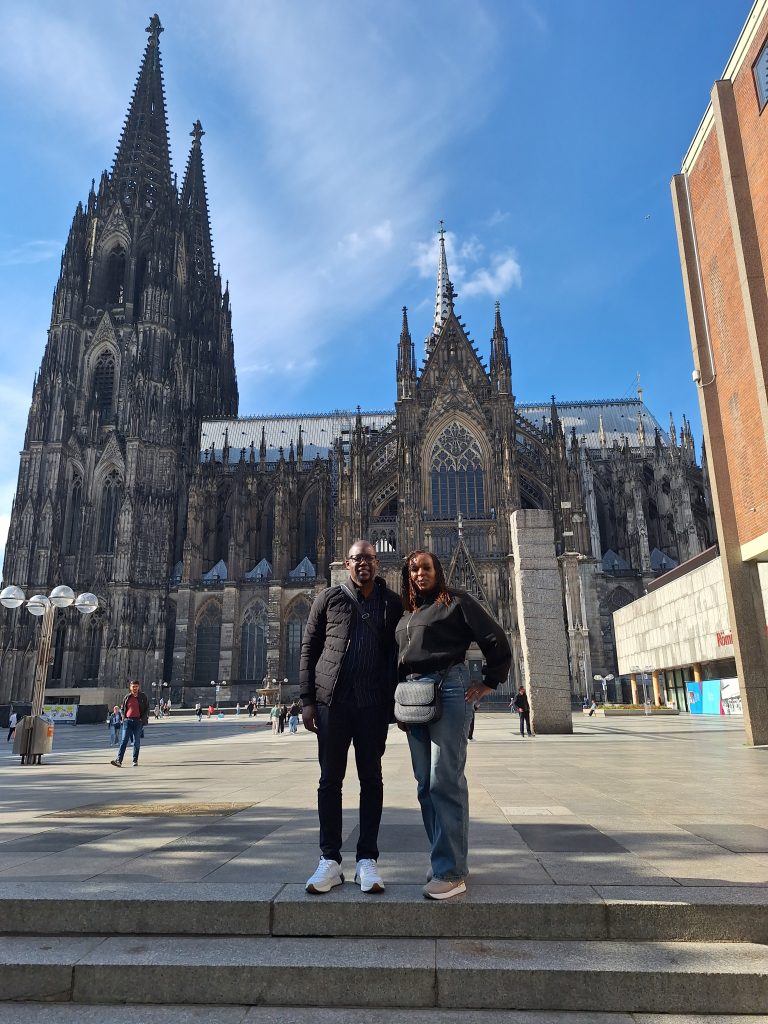
Recently, my wife and I had the rare opportunity to travel across Europe. It was one of the most memorable experiences of our lifetime. Beyond the clean streets, excellent transportation systems, prompt emergency medical response units, and the near-seamless efficiency of everyday life, one thing captured my attention above everything else: the realization that the developed world was built over a very long period of time.
When those of us from Africa travel to Europe, there is often a sense of inspiration mixed with reflection. We think, We can also do this! Why can’t we do this? Then come the more introspective questions: Where were we when they were building this? How did we fall so far behind? And finally, the question many quietly ask: When will we ever catch up?
Perhaps there are many valid answers to those questions. However, the reality of our current situation cannot be ignored or wished away. Africa still has a long journey ahead in terms of infrastructure, efficient systems, and cultivating a culture of collective responsibility.
One thing is certain: Europe was not built overnight. It was developed over centuries. Although we now have the advantage of technology and the internet, we cannot shortcut the process. You can construct a magnificent building in one or two years, but if the systems and culture needed to maintain it are absent, that building will eventually deteriorate. Infrastructure and culture must grow together; one cannot be sustained without the other.
A perfect example is the Cologne Cathedral in Germany. Construction began on August 15, 1248, was interrupted for several centuries, and was finally completed in 1880—a remarkable span of 632 years. During our visit, we stood in awe of this magnificent cathedral, which now attracts approximately six million visitors every year.
What struck me most was not merely its architectural beauty, but the mindset of those who began building it. They knew they were laying the foundation for a cathedral that neither they nor several generations after them would live to see completed. They built for a future generation. Today, the cathedral stands as a historic testimony to their faith, vision, perseverance, and sacrifice.
I believe Africa—and especially my country, Kenya—is willing to make the necessary sacrifices for development. The only caution, and perhaps the reality we must embrace, is that meaningful transformation takes time. Sustainable infrastructural development and cultural transformation must advance together.
This principle extends beyond nations. It applies to our families, businesses, ministries, and personal lives.
The question I leave with you is this: Do you have the systems and the culture to sustain what you are building? If not, perhaps it is time to return to the drawing board and refine the vision. Vision alone is not enough. Systems, culture, and character must grow alongside it.
In the coming blogs, I will share some of the lessons I learned during this journey about work, time, structure, and systems. These four principles are essential for anyone who desires to build something that will outlive their generation.
Let me leave you with this Scripture:
Proverbs 19:21 (NKJV)
“There are many plans in a man’s heart, Nevertheless the LORD’s counsel—that will stand.”
Yours,
Rev. Elias
Be Blessed.
Thank you Pastor Elias,
This is article has many highlights in history, architecture, financial and social. On top of my mind is the aspect of planning – did the founders of Cologne cathedral envisage long term construction or it was continous improvement that culminated in 1880?
This article can open the eye of business/commerce to the development of Europe.
Congratulations.
Thank you for your insightful commenty Patrick. Be blessed.